Martinsburg, WV
4.520 reviewsRated 4.5 out of 5 from 20 reviews
Refrigerator Repair · Washer Repair · Dryer Repair +3 more
LicensedInsured
West Virginia
2 companies on record. Compare ratings, licensing, and brands, then call the shop directly — there is no lead fee and no middleman.
Typical cost: $50–$120 for the diagnostic visit and $100–$500 for the repair itself, depending on the appliance — dishwasher, dryer, oven & range are the most widely covered here.
Listed Martinsburg addresses fall in ZIP code 25401. Vans travel well past their own ZIP, so give yours on the call and ask whether a trip charge applies.
Sorted by customer rating, then review volume.
Martinsburg, WV
Refrigerator Repair · Washer Repair · Dryer Repair +3 more
Every Martinsburg company on one row. Ratings, years in business, coverage, and a direct number.
| Business | Rating | Est. | Brands | 24/7 | Licensed | Phone |
|---|---|---|---|---|---|---|
| Mark's Appliance Service and Parts | 4.520 | — | 8 | — | Yes | (304) 267-6410 |
| Mark's Appliance Service | — | — | — | — | — | — |
Rating shows the score followed by the review count. A dash means the business did not state that detail — confirm directly before booking.
Every appliance Martinsburg pros service, with the diagnostic fee, the typical repair, and what a replacement would cost instead.
A repair bill in Martinsburg has two parts. The first is the diagnostic or service-call fee — $50–$120 depending on the appliance — which many shops credit toward the job if you go ahead. The second is the repair itself, from $100–$500 once parts and labor are counted. Ask for both numbers separately before you authorize anything.
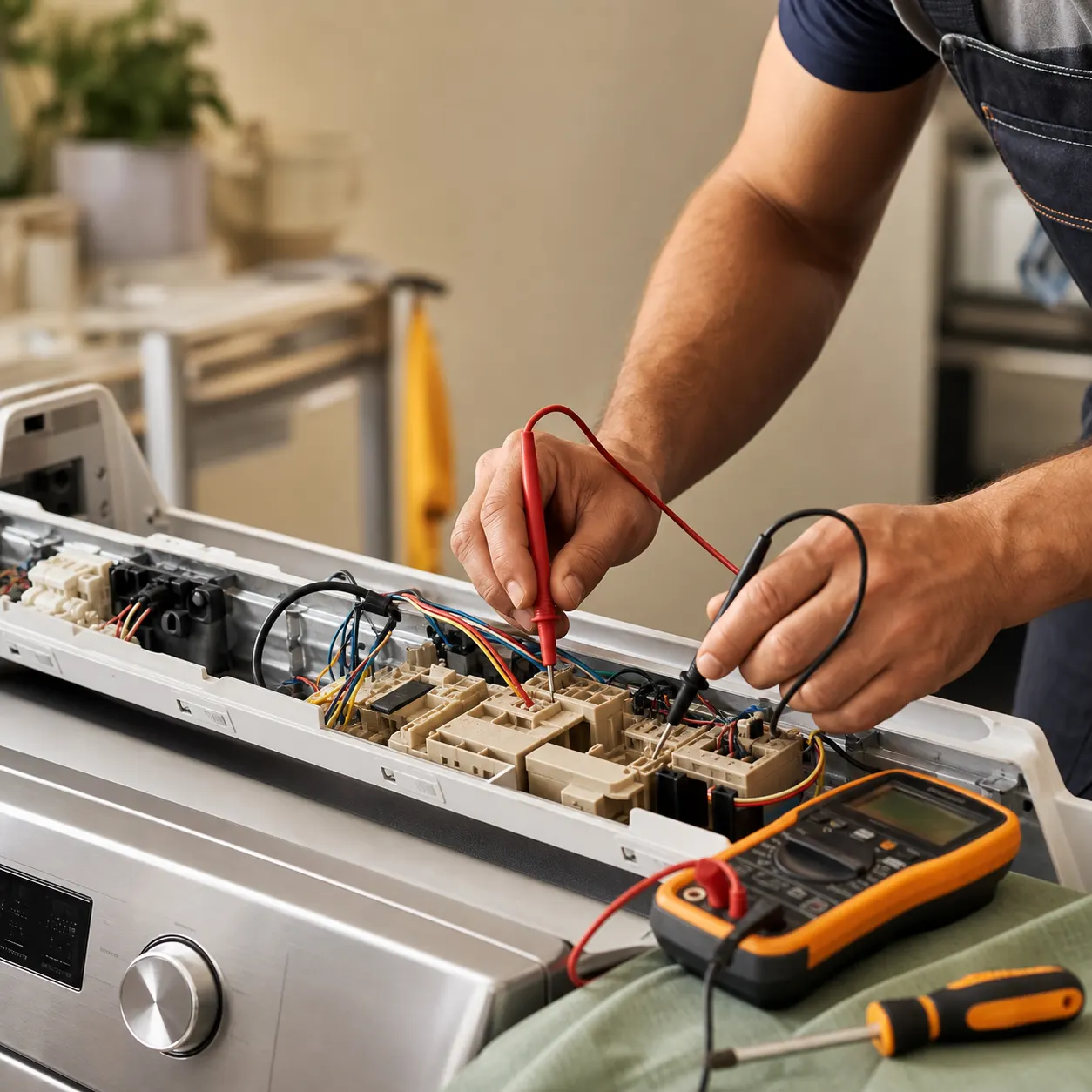
What local pros actually do
Martinsburg technicians list everything from routine maintenance to control-board diagnosis. Ask what they found, what the part costs, and whether the repair is covered by a warranty.
| Appliance | In Martinsburg | Diagnostic | Typical repair | New unit | Avg. life |
|---|---|---|---|---|---|
| Dishwasher repair | 1 | $50–$100 | $150–$300 | $700 | 10 yrs |
| Dryer repair | 1 | $50–$100 | $100–$350 | $750 | 12 yrs |
| Oven & Range repair | 1 | $50–$120 | $100–$500 | $1,000 | 14 yrs |
| Refrigerator repair | 1 | $50–$120 | $200–$400 | $1,200 | 14 yrs |
| Washer repair | 1 | $50–$100 | $150–$350 | $800 | 11 yrs |
Diagnostic and repair figures are national ranges, not quotes. New-unit prices and service life are the averages behind our appliance value estimator. The pro count is the number of listed companies here that name that appliance.
These are national bands, not quotes for Martinsburg, WV. Labor rates track local wages, insurance, and drive time, so the same job costs measurably more in a dense, high-cost metro than in a smaller market, while the part itself costs roughly the same anywhere. Sealed-system refrigerant work, built-in installations, and luxury brands sit at the top of every range because fewer technicians are certified for them and parts are ordered rather than stocked. Get two or three quotes before you commit.
A quote is worth checking against the appliance's remaining value. The rule of thumb built into our value estimator: replace rather than repair once the quote passes about half the price of a comparable new unit and the appliance is past roughly two-thirds of its expected service life. Under both thresholds, repair is almost always the cheaper decision.
Check what your appliance is worthBeyond the appliances above, these are the jobs companies here name on their own profiles. The number is how many list it.
Matched to the appliances Martinsburg pros actually service. Every guide states the DIY cost against the pro cost.
A meaningful share of service calls are resolved by something a homeowner can check first: a clogged dryer vent, a blocked washer pump filter, dust-caked condenser coils, a spray arm full of debris. Work through the relevant guide before you book — if it does not resolve it, you will at least be able to describe the symptom precisely, which is what gets the right technician and the right part on the first visit.
Dishwasher
A dishwasher cleans with four things: hot water, enough of it, spray pressure, and detergent that gets released at the right moment. When dishes come out gritty, one of those four is missing, and the job is to work out which. Be precise about the symptom first, because it points at different faults — food particles left stuck on is a spray or filter problem, a chalky white haze is a water hardness and rinse aid problem, and food redeposited as a fine grey film across everything is a filter or drain problem. This guide covers the first of those.
Dryer
A dryer that tumbles happily but leaves clothes cold and wet has lost its heat source, and the diagnosis splits immediately on fuel type. On an electric dryer, the two things worth checking before you open the cabinet are the cycle setting and whether the machine is still receiving both of its 240-volt legs — between them they account for a great many no-heat calls and neither costs anything. On a gas dryer, the ignition sequence is visible through the burner opening, and watching one cycle tells you which of three parts has failed. Work through the shared checks first, then take the branch that matches your machine.
Oven & Range
Uneven baking and a miscalibrated oven are two different faults that get reported with the same words, so the first job is to tell them apart. An oven that is simply running cool or hot everywhere at once needs calibrating and nothing else. An oven that browns one corner of a tray and leaves the opposite corner pale has an airflow, element or door problem, and no amount of offset adjustment will help. Twenty minutes with a slice of bread will tell you which one you have, and that determines everything that follows.
Refrigerator
A refrigerator that has stopped cooling is not one fault but a family of them, and the fastest way to narrow it is to look at the freezer before the fridge. If both compartments are warm, the problem is in the machinery that makes cold — power, the condenser, the compressor circuit. If the freezer is still making ice but the fresh food section has gone warm, the cold is being made and not delivered, which points at airflow rather than refrigeration. Everything below is ordered so the free checks come first and the expensive conclusions last.
Washer
A washer that will not drain has a blockage somewhere along a short, entirely traceable path: tub, sump, tub-to-pump hose, pump, drain hose, standpipe, house drain. The mistake almost everyone makes is buying a pump first. Work the path in physical order from the drum outward, and in most cases you will find a sock or a handful of lint long before you reach anything electrical. Start by getting the standing water out, because you cannot inspect anything until the tub is empty.
Dishwasher
An inch or two of water left in the bottom of a dishwasher at the end of a cycle almost always means a blockage rather than a dead pump. The drain path runs filter, sump, check valve, drain hose, then either a disposal or an air gap and out — and there are exactly five places it can clog. Work along the path in order and most people find it in the first two.
Six checks that take a few minutes on the phone and decide whether the rest of the job goes well.
This directory publishes what each company states about itself and links straight to its own phone number — we do not sell leads and we do not vet anyone on your behalf. The verification below is yours to do, and it is the same in West Virginia as anywhere else: confirm the paperwork, then confirm the price, in that order.
There is no single national appliance repair license. Requirements are set state by state, and in some places by the city or county, so the only reliable check is the paperwork. Ask which license or registration the company works under, get the number, and confirm it is active with the authority that issued it before you book.
A technician works on your water lines, your gas line, and your electrical circuits. Ask for a current certificate of general liability insurance in the company's name and check that the policy is in force on the day of the visit. A company that carries it will send the certificate without hesitating.
Section 608 of the federal Clean Air Act requires EPA certification for anyone who opens a sealed refrigerant system. That covers refrigerators, freezers, ice makers, and wine coolers. If a quote involves recovering, recharging, or brazing refrigerant lines, ask to see the certification before the work starts.
Most shops charge a service-call or diagnostic fee to send a technician out, and many credit it toward the repair if you go ahead. Ask what the fee is and whether it is credited, then ask for a written estimate that itemizes parts, labor, and any trip charge before you authorize the job.
Parts and labor are usually guaranteed for different lengths of time and the terms vary by company, so ask for both in writing rather than assuming. Ask specifically who pays for the return visit if the same fault comes back within the term.
A deposit against a special-order part is normal; a large up-front payment for the whole job is not. Pay the balance once the appliance has been tested in front of you, and keep the itemized invoice — you will need the part number and the labor term for any warranty claim later.
The ZIP codes on file, where these companies say they work and the other West Virginia cities in the directory.
The 2 companies on this page give addresses in 1 ZIP code — 25401. A ZIP here is where the business is registered, not a limit on where it will drive; the areas each one actually claims are listed further down.
Every ZIP code appearing on a listed Martinsburg address, taken straight from the records. Companies without a ZIP on file are not counted here rather than assigned one.
Taken from the service areas the 2 companies above list on their own profiles — 3 distinct places in total. Neighborhoods and suburbs are shown exactly as stated — confirm your exact address when you book.
Get listed and connect with homeowners looking for local repair services.
List your business