A & B Appliance Repair
22 yrs in businessLouisville, KY
5.01,300 reviewsRated 5.0 out of 5 from 1300 reviews
Refrigerator Repair · Washer Repair · Dryer Repair +3 more
LicensedInsured
Appliance repair
Most dryer service calls are heat or airflow faults, and a large share are vent restrictions rather than a broken part. Restricted venting is also the leading cause of dryer fires, so it is worth fixing properly rather than working around.
674 of the 873 businesses in this directory list dryer repair, across 50 states and 317 cities. Below them: what actually fails, what the repair costs, and when replacing is the better call.
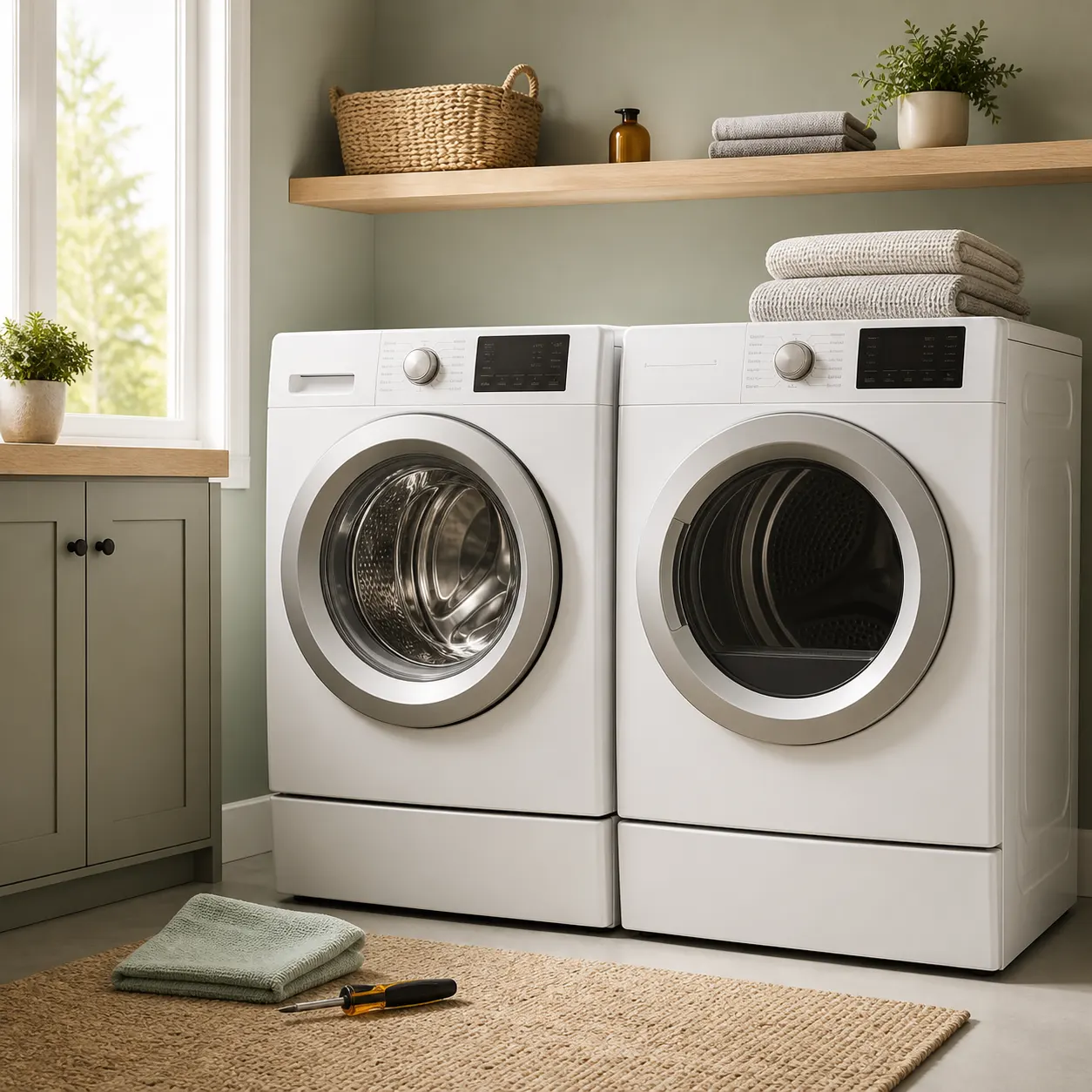
The 12 highest-rated of 674 businesses that service dryers. Call the number on the listing — we never take a cut.
Louisville, KY
Refrigerator Repair · Washer Repair · Dryer Repair +3 more
Torrance, CA
Refrigerator Repair · Washer Repair · Dryer Repair +9 more
Stamford, CT
Refrigerator Repair · Washer Repair · Dryer Repair +3 more
Houston, TX
Refrigerator Repair · Washer Repair · Dryer Repair +4 more
Portland, OR
Refrigerator Repair · Washer Repair · Dryer Repair +2 more
San Diego, CA
Refrigerator Repair · Refrigerator Installation · Washer Repair +8 more
Wheat Ridge, CO
Refrigerator Repair · Washer Repair · Dryer Repair +3 more
Fargo, ND
Refrigerator Repair · Washer Repair · Dryer Repair +4 more
Tampa, FL
Refrigerator Repair · Freezer Repair · Washer Repair +5 more
Fayetteville, AR
Refrigerator Repair · Washer Repair · Dryer Repair +4 more
Dallas, TX
Refrigerator Repair · Washer Repair · Dryer Repair +4 more
Seattle, WA
Refrigerator Repair · Washer Repair · Dryer Repair +2 more
662 more dryer repair businesses are indexed by state and city further down this page.
Symptom, the cause it most often turns out to be, and whether it is homeowner work or a job that has to go to a licensed technician.
A dryer that tumbles but leaves clothes damp is nearly always telling you about its vent, not its heater. Lint accumulates along the whole duct run, the machine cannot expel moist air, the internal temperature climbs, and eventually a thermal fuse sacrifices itself to protect the cabinet. Replacing that fuse without clearing the duct just resets the countdown.
Gas and electric dryers fail differently and are priced differently. Electric machines lose heating elements and thermal fuses — cheap parts, quick jobs. Gas machines lose igniters, flame sensors and gas valve coils, and the work is restricted to licensed technicians in every state. Say which you have when you call.
Tumbles but produces no heat at all
TechnicianA blown thermal fuse — usually triggered by a restricted vent — or a failed heating element on an electric machine, or an igniter on a gas one.
Step-by-step: Dryer Not Heating →Heats but clothes take two or three cycles to dry
Homeowner fixA crushed, kinked or lint-packed vent line, or a blocked exterior flap. Airflow, not heat, is the limiting factor.
Step-by-step: Dryer Takes Too Long →Loud rumbling, thumping, or a rhythmic squeal
TechnicianWorn drum rollers, a failing idler pulley, or a glazed drive belt. All are wear parts and are usually replaced together.
Step-by-step: Dryer Squealing or Thumping →Will not start, no sound at all
TechnicianThe door switch, the start switch, or a thermal cut-off on the heater circuit. Door switches fail from thousands of open-close cycles.
Step-by-step: Dryer Won't Start →Cabinet or laundry room gets very hot during a cycle
TechnicianThe vent is discharging into the room, or the cycling thermostat has failed closed. Treat this as urgent — it is the classic pre-fire condition.
Step-by-step: Dryer Takes Too Long →Burning smell during operation
TechnicianLint scorching on the heating element or against the drum. Stop the machine and have the cabinet opened and cleaned out before running it again.
Gas dryer clicks repeatedly but never lights
Licensed trade onlyThe igniter glows but the gas valve coils are not opening, or the flame sensor has failed. Gas train work is licensed-only in every state.
Clothes come out with grease or scorch marks
TechnicianA torn drum seal letting laundry contact the bearing area, or a cracked drum glide. Cheap parts, but the damage to clothes is not.
Each item below maps directly onto a fault in the list above. This is the whole of dryer preventive maintenance — there is nothing else worth doing.
Clean the lint screen
Every loadPrevents: Restricted airflow, long cycles, and the heat build-up behind most failures.
Wash the lint screen with soapy water and a brush
Every 6 monthsPrevents: The invisible fabric-softener film that blocks a screen that looks clean.
Disconnect and clean the full vent run and exterior hood
AnnuallyPrevents: Blown thermal fuses, two-cycle drying, and the leading cause of dryer fires.
Replace foil flex duct with rigid or semi-rigid metal
OncePrevents: The restriction that makes every other failure on this list more likely.
Check the exterior flap opens fully when running
Every 6 monthsPrevents: Bird nests and lint mats that block discharge entirely.
Free step-by-step guides and the replacement parts that fix most dryer faults, with realistic difficulty ratings.
6 more dryer repair guides cover the rest of the faults above.
| Part | Typical price | Difficulty |
|---|---|---|
| Thermal FuseLasts One-time (blows when overheated) | $5–$20 | easy |
| Heating ElementLasts 8–15 years | $20–$60 | moderate |
| Cycling and High-Limit ThermostatsLasts 8–15 years | $10–$40 | easy |
| Drive BeltLasts 8–14 years | $12–$45 | moderate |
| Drum Rollers and Idler PulleyLasts 7–12 years | $20–$70 | moderate |
| Gas IgniterLasts 6–12 years | $20–$65 | moderate |
| Gas Valve Coil KitLasts 8–15 years | $20–$65 | moderate |
| Door SwitchLasts 8–15 years | $10–$40 | easy |
| Blower WheelLasts 10–15 years | $20–$70 | moderate |
| Moisture Sensor BarsLasts 10+ years | $15–$50 | easy |
Counts are how many of the 674 businesses servicing dryers name that brand. 53 distinct brands are covered in total, and 34 of these businesses hold a factory-authorized servicer credential.
Dryer parts are among the most interchangeable in the trade, so brand rarely limits who can help — with one exception: heat-pump and condenser dryers from Bosch, Miele and LG use sealed refrigerant circuits and need a technician who explicitly services them.
50 states with listed dryer repair businesses. Each opens a ranked list for that state.
317 cities have at least one listed dryer specialist. Ranked by how many.
National ranges for parts and labor together, before the diagnostic fee. Regional labor rates move these by roughly 20% either way, and no figure here is a quote.
| Repair | Parts + labor |
|---|---|
| Full vent cleaning, machine to exterior hoodThe highest-value maintenance spend on any appliance in the house. | $100–$200 |
| Thermal fuseAlways paired with a vent clean or it blows again within weeks. | $100–$200 |
| Heating element (electric)Part is $20–$60; the rest is access and labor. | $150–$300 |
| Igniter or flame sensor (gas)Licensed work. Ask the technician to leak-check the connection afterwards. | $150–$300 |
| Drum rollers, belt, and idler pulleyReplace as a set — the cabinet is already open. | $150–$350 |
| Door switch or start switchQuick job; often the same-visit fix. | $100–$220 |
| Cycling or high-limit thermostatUsually accompanied by a vent restriction that caused it. | $120–$260 |
| Gas valve coil setLicensed only. Coils are replaced in pairs. | $200–$400 |
Blue Book
A quote above $375 on a dryer past 8 years old is usually money better spent on a replacement. Below that line, and with life left on the clock, repair wins almost every time.
Estimate my dryer’s valueAdjusts for brand tier, age and condition. Free, no sign-up.
10–13 years. Dryers are mechanically simple and often outlast the washer they were bought with, provided the vent run is short, rigid, and cleaned annually.
Long flexible-foil duct runs are what kill dryers early. Every extra bend adds restriction, restriction raises internal temperature, and heat is what ages elements, thermostats, belts and bearings. A machine on a 30-foot vent run does not live as long as the same machine on a 6-foot one.
Every listing above is a real business with a real phone number. Compare two or three on rating, licensing and years in business, then call the one that explains the job best — and tell them what you found in the fault list above.