Parts reference
Appliance parts, priced honestly
The parts that actually fail on each appliance, what they typically cost, how hard they are to fit, and where to buy them. Start with your model number — without it, no supplier can sell you the right part.
- Parts priced
- 103
- Appliance types
- 12
- Suppliers
- 5
- Price band
- $5–$380
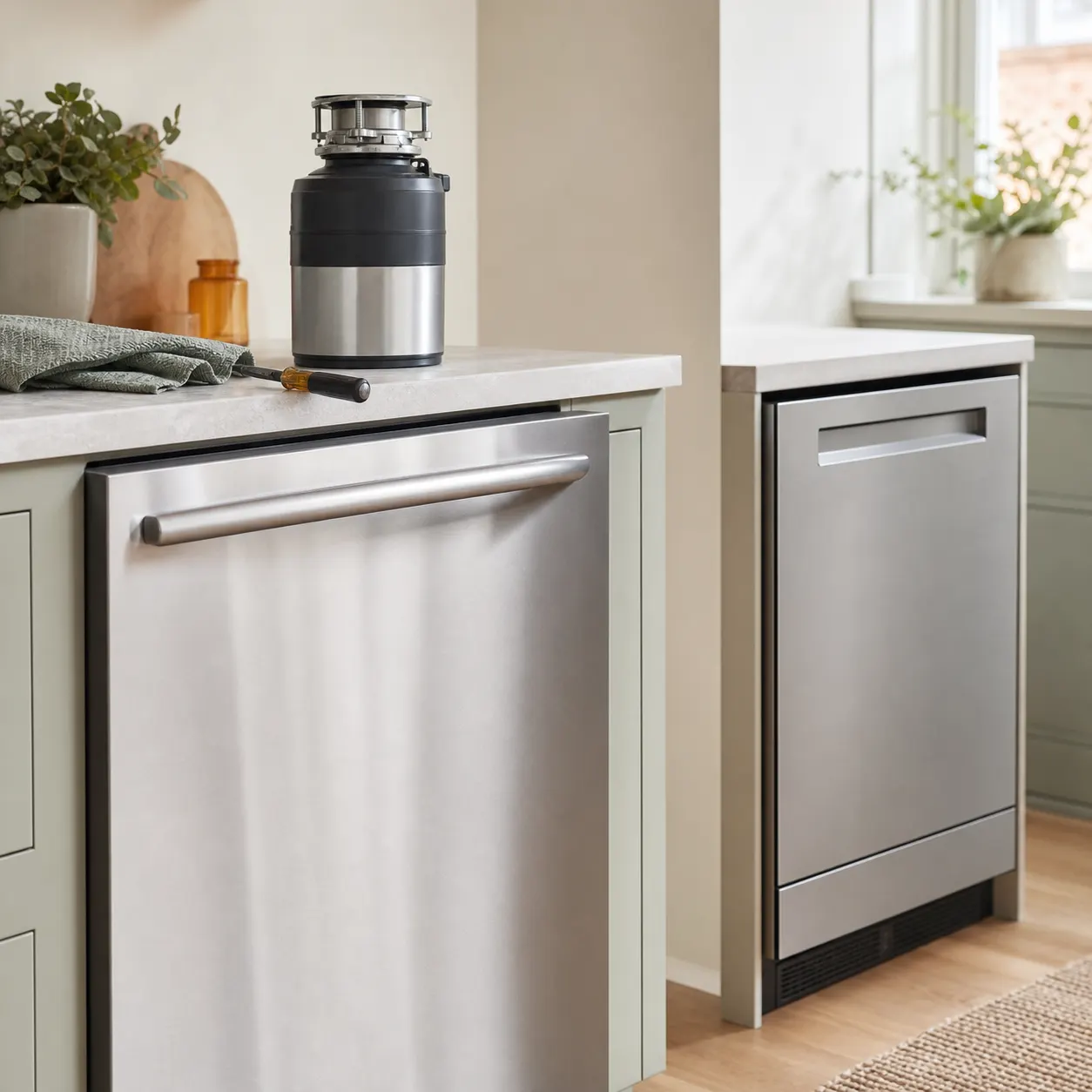
First, find your model number
Every parts supplier searches on the model number. The name on the front of the appliance is a series name and returns nothing. Here is where the tag hides.
Step 01
Open the door and look at the edges
On most appliances the tag sits on a surface you can only see with the door open — the door rim, the tub edge, or the frame behind it. Take a torch. The tags are printed small and often faded.
Step 02
Photograph the whole tag
Not just the model number. The serial number underneath it tells a parts desk which production run you have, which matters whenever a part changed partway through a model’s life. A phone photo beats a transcription every time.
Step 03
Search the full string, revision included
A model number like WRF535SWHZ00 ends in a revision code. Drop it and you may be shown a part that fitted the first production run and not yours. If a search returns nothing, you have probably read a shorter series code instead.
| Appliance | Look here first | Then check | Tag length |
|---|---|---|---|
| Refrigerator | Inside the fresh-food compartment, on the side wall | On the ceiling of the fresh-food compartment | 8–15 chars |
| Washer | Inside the door opening (front-load) | Under the lid rim (top-load) | 10–14 chars |
| Dryer | Inside the door opening | In the lint filter slot | 10–14 chars |
| Dishwasher | On the edge of the inner door | On the tub rim | 10–14 chars |
| Oven & Range | On the frame behind the oven door | Behind or inside the bottom storage drawer | 10–15 chars |
| Microwave | On the back or side of the cabinet (countertop) | Inside the door frame (over-the-range) | 8–12 chars |
| Garbage Disposal | On the side of the motor housing | On the bottom of the unit | Varies |
| Ice Maker | Inside the storage bin | Behind the front kick plate or grille | 8–14 chars |
| Freezer | On the exterior side or back (chest freezer) | Inside on the side wall (upright) | 8–14 chars |
| Trash Compactor | On the frame behind the drawer | On the side of the cabinet | 8–12 chars |
| Wine Cooler | Inside on the rear or side wall | Behind the lower kick plate or grille | 8–14 chars |
| Range Hood | Behind the grease filters | Inside the chimney cover | 8–14 chars |
The parts that fail most
The three most-replaced parts on each appliance, with what you notice when they go. Prices are typical retail ranges for the part alone — not quotes, and not including labour.
| Appliance | Part | What you notice | Install | Typical price |
|---|---|---|---|---|
| Refrigerator | Evaporator fan motor | Freezer is cold, fresh-food side is warm, and the fridge is unusually quiet. | moderate | $40–$120 |
| Refrigerator | Condenser fan motor | Whole fridge runs warm and the compressor is hot enough to be uncomfortable to touch. | moderate | $50–$150 |
| Refrigerator | Start relay and overload | Compressor clicks on, runs a few seconds, clicks off, and repeats every few minutes. | easy | $12–$45 |
| Washer | Drain pump | Machine hums at the drain step, water stays in the drum, cycle stalls with an F21, 5E or OE code. | moderate | $35–$120 |
| Washer | Lid switch or lid lock | Top-loader fills and agitates but will not spin or drain. | easy | $20–$75 |
| Washer | Door lock assembly (front-load) | Door will not latch, or the cycle refuses to start and the lock light blinks. | moderate | $40–$140 |
| Dryer | Thermal fuse | Drum tumbles, air stays cold, clothes come out damp and warm at best. | easy | $8–$28 |
| Dryer | Heating element (electric) | No heat at all, and the thermal fuse tests good. | moderate | $25–$85 |
| Dryer | Cycling and high-limit thermostats | Heat comes on but runs too hot, or cuts out partway through the cycle. | easy | $10–$40 |
| Dishwasher | Drain pump | Standing water in the sump at the end of every cycle, often with a buzz at the drain step. | moderate | $35–$120 |
| Dishwasher | Spray arm | Top rack comes out dirty, or grit sprayed back onto everything. | easy | $15–$55 |
| Dishwasher | Door latch and switch assembly | Cycle will not start, or stops the moment the door is nudged. | easy | $20–$80 |
| Oven & Range | Bake element | Oven never reaches temperature, or the broiler works and baking does not. | easy | $20–$65 |
| Oven & Range | Oven temperature sensor | Oven runs 50 degrees off, swings wildly, or throws an F3/F4 style code. | easy | $15–$50 |
| Oven & Range | Oven igniter (gas) | Gas oven takes forever to light, or never lights while the cooktop burners work fine. | moderate | $25–$90 |
| Microwave | Door interlock switch set | Nothing happens when you press start, or the unit trips the breaker when the door opens. | moderate | $10–$40 |
| Microwave | Turntable motor | Plate sits still while the microwave heats, so food cooks in stripes. | easy | $15–$50 |
| Microwave | Turntable coupler and roller ring | Plate wobbles, sticks, or turns in fits. | easy | $8–$30 |
| Garbage Disposal | Splash guard / baffle | Water spitting back up out of the drain, or a persistent smell that cleaning does not fix. | easy | $8–$28 |
| Garbage Disposal | Discharge tube and gasket | Drip under the sink that appears only while the disposal is running. | easy | $8–$30 |
| Garbage Disposal | Sink mounting assembly | Unit hangs loose, twists when you load it, or leaks at the top of the flange. | moderate | $15–$50 |
| Ice Maker | Water filter | Thin, hollow or cloudy cubes, and production that has quietly halved. | easy | $25–$70 |
| Ice Maker | Water inlet valve | Machine cycles but no water enters the mould, or it overfills and freezes solid. | moderate | $30–$100 |
| Ice Maker | Ice maker module or assembly | Ice never ejects, or the maker fills and refills without harvesting. | moderate | $90–$280 |
| Freezer | Start relay and overload | Compressor clicks and stops repeatedly, and the box slowly warms. | easy | $12–$45 |
| Freezer | Door gasket | Ice building on the lid or door frame, and a lid that no longer pulls itself shut. | easy | $40–$140 |
| Freezer | Temperature control thermostat | Freezer runs continuously, or never runs at all, regardless of the dial setting. | moderate | $25–$90 |
| Trash Compactor | Drive belt | Motor runs, ram does not move, and there is a slipping noise from the base. | moderate | $15–$60 |
| Trash Compactor | Directional or limit switch | Ram travels down and stops there, or the cycle never ends. | moderate | $20–$70 |
| Trash Compactor | Drawer latch and safety switch | Unit will not run with the drawer closed, or runs with it open. | moderate | $20–$75 |
| Wine Cooler | Cooling fan | Cabinet drifts warm and the unit is silent, or one zone of a dual-zone unit runs warm. | easy | $20–$70 |
| Wine Cooler | Thermoelectric (Peltier) module | Fans run, the back of the cabinet is warm, and the inside never gets cold. | moderate | $30–$100 |
| Wine Cooler | Door gasket | Condensation on the glass, a cabinet that never settles at its set point, and a compressor that never rests. | easy | $30–$110 |
| Range Hood | Grease filter (mesh or baffle) | Poor extraction, grease on the cabinet fronts, and a fan working audibly harder. | easy | $15–$65 |
| Range Hood | Charcoal filter (ductless) | Cooking smells linger even with the fan on full. | easy | $15–$55 |
| Range Hood | Blower wheel | Rattle, vibration, or a marked drop in airflow with clean filters. | moderate | $20–$80 |
Easy
Nothing structural comes apart. Unplug it, swap the part, put the panel back. Most people finish inside half an hour.
Moderate
One or two panels come off and you test before you buy. A multimeter set to continuity settles nearly every one of these.
Advanced
Sealed refrigerant, gas connections, or the machine on its back. Price the job with a technician before you order the part.
Roughly 41% of the parts listed on this site are rated easy — no panel comes off, no multimeter needed. That is the honest reason to check the part price before you accept a replacement quote.
OEM or aftermarket
The trade-off is real in both directions. Paying OEM for a drive belt is waste; saving on a control board or a door seal costs you the repair twice.
What OEM actually buys you
An OEM part is the one the manufacturer specifies, in manufacturer packaging, and it is usually made by the same component supplier who built the original. What you are paying for is a guaranteed dimensional and firmware match, a manufacturer warranty whose length you should check before you buy rather than assume, and a part number you can verify against the exploded diagram for your exact model. Our own estimate, not a surveyed figure: the premium over a comparable aftermarket part typically runs 30 to 60 percent.
What aftermarket actually is
Aftermarket covers an enormous quality range, from a second production line at the same factory to the cheapest possible copy. The signal to look for is a stated part number cross-reference and a published warranty; the warning sign is a marketplace listing whose only claim is “compatible with” a list of brands. “Genuine replacement” is marketing language, not a specification.
| Part category | Buy | Why |
|---|---|---|
| Control and logic boards | Buy OEM | The firmware is matched to the model and revision. A board that is one revision out either refuses to run the machine or runs it wrongly, and boards are almost never returnable once installed. |
| Gaskets, boot seals and door seals | Buy OEM | The seal is a moulded profile, not a strip of rubber. A copy that is a millimetre off in section leaks or ices up, and you will not find out until the machine has run a dozen cycles. |
| Safety interlocks and gas components | Buy OEM | Microwave door switches, gas valve coils and compactor safety switches are the parts that stop the appliance hurting someone. The saving on a copy is a few dollars. |
| Sealed-system and compressor parts | Buy OEM | Refrigerant work is EPA-regulated and the components are matched to the charge. If you are this far in, you are hiring a technician anyway, and they will specify the part. |
| Thermal fuses, thermostats and sensors | Aftermarket is fine | These are published-spec commodity components, frequently made in the same factories as the branded part. Match the rating on the old part and buy on price and warranty. |
| Belts, rollers, pulleys and couplers | Aftermarket is fine | Purely mechanical, dimensionally specified, and cheap enough that buying a spare alongside is reasonable. Reputable aftermarket kits often include the neighbouring wear parts. |
| Pumps, valves and fan motors | Either works | Fit is what matters, not badging. A known aftermarket brand at 30–50% less is a sound buy; an unbranded marketplace listing with no part number is not. |
| Filters, lamps and consumables | Either works | Buy on certification rather than brand. For water filters that means an NSF/ANSI certification mark on the packaging — without one you are paying for a plastic housing and hope. |
One thing worth knowing about warranties
In the United States the Magnuson-Moss Warranty Act stops a manufacturer from conditioning warranty coverage on the use of its own branded parts unless it supplies those parts free of charge. It can still deny a specific claim if it can show the aftermarket part caused the failure — so keep the receipt, and note what you fitted and when. If the appliance is still inside its original warranty, call the manufacturer before you buy anything at all.
Where to buy
5 national suppliers, with the shipping and returns terms each one publishes. Where a supplier does not state a term, we say so rather than guess. We are not affiliated with any of them and earn nothing from these listings.
| Supplier | Shipping | Returns | Part finder | Types |
|---|---|---|---|---|
| PartSelectpartselect.com1-888-738-4871 | Free over $49 | 365 days | Model number search | 11 |
| RepairClinicrepairclinic.com1-800-269-2609 | Not listed | 365 days | Symptom-based finder | 10 |
| Appliance Parts Prosappliancepartspros.com1-877-477-7278 | Same-day dispatch | Not listed | Parts diagrams by model | 8 |
| Sears Parts Directsearspartsdirect.com1-800-252-1698 | Not listed | Not listed | Model lookup with exploded diagrams | 10 |
| Amazon Appliance Partsamazon.com1-888-280-4331 | Prime next-day | Easy returns, no window stated | Keyword search and reviews | 12 |
Shipping and returns terms are those each supplier publishes and can change without notice. Confirm the current terms at checkout, and confirm the part fits your model number before you pay — a returns window is worth little if the part was never going to fit.
Parts by appliance
Full failure list, model number locations and stocking suppliers for one appliance at a time.
Fit it yourself
108 step-by-step guides for the faults these parts cause, with the tools and the safety warnings up front. Grouped by appliance, in the order they appear above.